Lacy Heirloom Christmas Ornaments for Nostalgic Decor
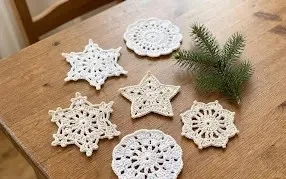
Fine cotton thread gives these lace Christmas ornaments an airy, heirloom look, with open stitches that catch the light on a tree or in a sunny window. Once blocked, each piece feels delicate but holds its shape, and a small hanging loop makes it easy to display. The pattern suits beginners who are ready to practice chain stitches and simple crochet stitches, as well as gift makers and anyone who loves handmade holiday decor. You’ll learn how repeated lace motifs build into a flat ornament, then see how blocking helps the edges lie neatly. It’s a satisfying project to work in a quiet evening, and each finished piece uses little thread while adding a personal touch to seasonal decorating.
Why You’ll Love This Pattern
A firm cotton fabric makes this single-crochet dishcloth useful for wiping counters, washing dishes, or keeping beside the sink. The pattern works in straight rows, so you can concentrate on even edges and consistent tension rather than shaping. It uses a small amount of worsted-weight cotton and is a practical way to use a partial skein. The finished square is also easy to wash and reuse.
One crocheter’s note: The rows were easy to count, and the finished cloth feels sturdy without being stiff.
The simple rows made this a relaxing evening project, and my first cloth came out square enough to use right away.
— Maya, beginner crocheter
Pattern Overview & Skill Level
- Skill Level: Beginner. You need to make a foundation chain and work single crochet in rows.
- Approximate Time: 2–3 hours, depending on your pace and how often you pause to check the stitch count.
- Construction: A flat square worked back and forth in single crochet. The foundation chain forms one edge; the remaining edges are left plain.
- Finished Dimensions & Sizing: About 6¾ × 6 inches after washing and drying flat. Small differences are normal; gauge and yarn can affect the finished size.
Materials & Supplies Needed
- Yarn: About 75 yards of worsted-weight (#4) cotton yarn. A smooth, absorbent 100% cotton in one color is easiest to work with and care for.
- Hook Size: 5.0 mm / H-8 crochet hook. Use the hook that gives you the listed gauge without making the fabric loose or hard to work into.
- Notions: Tapestry needle for the starting and ending tails, scissors, and a ruler or tape measure. A removable stitch marker can help mark the first stitch of each row.
- Substitutions: Cotton-linen blends can work, though they may feel less soft and can drape differently. Avoid acrylic for a dishcloth intended for hot cookware, since heat can damage synthetic fibers. A different yarn weight or fiber may change the size, thickness, absorbency, and yardage needed.
- Gauge: 14 single crochet stitches and 16 rows measure about 4 inches square. Check the gauge before starting; adjust your hook size if your sample is wider or taller than these measurements.
Stitch Guide & Abbreviations (US Terms)
- ch: Chain. Yarn over and pull the yarn through the loop on the hook.
- sc: Single crochet. Insert the hook into the indicated stitch, yarn over and pull up a loop, then yarn over and pull through both loops.
- st / sts: Stitch / stitches.
- rep: Repeat the stated sequence.
- RS / WS: Right side / wrong side of the fabric. For this reversible cloth, either side can be treated as the right side.
To turn at the end of a row, rotate the work so the opposite face is toward you. The turning chain does not count as a stitch in this pattern; work the first single crochet into the first stitch of each row.
Step-by-Step Pattern Instructions
Dishcloth
Make the foundation chain loosely enough that the first row does not pull in. Count the chain loops before beginning. Each row has 24 single crochet stitches. The turning chain is for height only and is not included in the stitch count.
- Foundation: Ch 25. (25 ch)
- Row 1: Sc in the second ch from the hook and in each ch across. (24 sts)
- Row 2: Ch 1, turn. Sc in each st across. (24 sts)
- Rows 3–24: Rep Row 2 twenty-two times, working 24 sc across every row. (24 sts each row)
After Row 24, fasten off, leaving a tail about 6 inches long. Pull the tail through the final loop to secure it. Thread the tail onto a tapestry needle and weave it through several stitches on the wrong side. Weave the foundation tail in the same way, changing direction once so it is less likely to work loose.
Finishing
Lay the cloth flat and check that the sides are close to square. If the foundation edge is shorter than the last row, the starting chain may have been too tight. Wash the cloth according to the yarn label, then dry it flat. A gentle hand adjustment while damp can even out the corners; avoid stretching the fabric beyond its natural shape.
Care & Washing Instructions
- Wash cotton in cool or warm water, up to 40°C (104°F), with like colors; follow the yarn label if it gives a lower limit.
- Lay flat to dry, or tumble dry on low only if the yarn label allows it; high heat can shrink cotton.
- While damp, smooth the edges and reshape the corners by hand; avoid pulling the cloth larger than its intended size.
Pro Tips & Common Mistakes to Avoid
- Keep the foundation chain relaxed. If it is tighter than your single crochet rows, the cloth will taper toward the starting edge. Try using a hook one size larger just for the chain if needed.
- Count all 24 stitches as you work across each row. Place a marker in the first stitch of a row if it is easy to miss, especially when working into the last stitch at the far edge.
- Weave in tails on the wrong side, passing the needle under several stitch backs and changing direction. Do not knot the ends on the surface, where they can catch during washing.
- For a larger cloth, add stitches to the foundation chain and add rows in the same proportion to keep a square shape. Extra width and length use more yarn; make a small gauge sample first if you have limited yardage.
Frequently Asked Questions
Can I use a different yarn for this dishcloth?
Yes, but cotton is the best choice for an absorbent, washable cloth. A cotton blend may change the drape and drying time. If you use a different yarn weight, check the gauge and expect the finished dimensions and yarn amount to change.
How can I make the cloth larger or smaller?
For a wider cloth, change the foundation chain while keeping one fewer single crochet than the number of chains. For a taller cloth, work more or fewer rows. To keep the shape square, compare the width and height as you go and stop when they are close to equal.
Is this pattern suitable for a first crochet project?
Yes. It uses only chains and single crochet, with no increases or decreases. The main challenge is keeping the edges straight, so count 24 stitches at the end of every row and check that you work into the first and last stitches.
May I sell dishcloths made from this pattern?
Check the designer’s pattern terms before selling finished items, and follow any limits on commercial use or required credit. If you sell a cloth, describe the fiber accurately and include its care instructions.
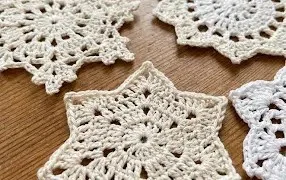
A finished lace ornament brings a soft, handmade note to a Christmas tree, wreath, or wrapped gift, and the repeated stitches make it rewarding to watch the motif take shape. For a simple variation, use cream thread for a vintage look or choose a muted red or green to suit your decorations. Block each piece before adding its hanging loop so the openwork can dry flat and show clearly. Share a photo of your ornament on Pinterest or your favorite social media, and explore more free crochet patterns on the blog for your next handmade project.