Free Christmas Grinch C2C Crochet Pattern for Beginners
Green yarn gives this Christmas square its unmistakable Grinch face, while a bright ornament adds a festive spot of color. The finished piece has a soft, textured surface made from small corner-to-corner blocks, with a pixel-style look that reads clearly from across the room. It can become part of a holiday throw or hang as seasonal wall decor. This project suits crocheters who know basic stitches and want to practice following a color chart, and it makes a cheerful handmade gift for a Grinch fan. Working the square is satisfying as the image appears row by row. Along the way, you’ll learn how C2C increases and decreases shape the fabric, how to change colors at the right block, and how to keep the yarn strands tidy on the back.
Why You’ll Love This Pattern
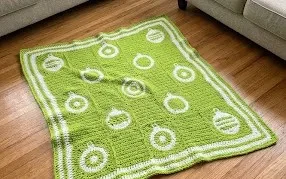
A firm cotton dishcloth has a soft, lightly ridged texture that works well for wiping counters and washing dishes. This beginner pattern uses single crochet in straight rows, so you can focus on even tension instead of managing a complicated stitch repeat. The finished cloth measures about 30 cm square, a useful size that folds easily beside the sink.
One skein is enough for the cloth, and the simple shape makes it a practical way to use leftover cotton yarn if you have at least 100 yards in one color. It also makes a useful handmade gift because the recipient can put it to work right away. Allow about 2.5 to 4 hours, depending on your pace and how often you stop to check the edges.
The rows were easy to keep track of, and the cotton made a sturdy cloth that I use every day.
— Maya, home crocheter
Pattern Overview & Skill Level
- Skill Level: Beginner. You need to chain, work single crochet, turn rows, and fasten off.
- Approximate Time: 2.5 to 4 hours.
- Construction: A flat square worked back and forth in rows, with no separate border or seams.
- Finished Dimensions & Sizing: About 30 × 30 cm (12 × 12 in) when gauge is met. Small differences in tension will change the final measurements.
- Gauge: 12 single crochet stitches and 12 rows measure 10 × 10 cm (4 × 4 in) in the pattern stitch, after gently flattening the swatch.
Materials & Supplies Needed
- Yarn: About 100 yards of medium-weight cotton yarn, also called Worsted #4. A solid or lightly flecked color makes the stitch texture easy to see. Cotton is absorbent and handles regular washing better than many acrylic yarns.
- Hook Size: 6.0 mm / J-10 crochet hook. Use the size that gives you the stated gauge; if your swatch is too large, try a smaller hook, and if it is too small, try a larger one.
- Notions: Tapestry needle for weaving in the yarn ends, scissors, and a ruler or tape measure for checking gauge. A stitch marker is optional for marking the first row.
- Substitutions: A similar-weight cotton-linen yarn can be used, though it may feel firmer and drape differently. Cotton blends are also suitable if the yarn label allows machine washing. Avoid fuzzy or very stretchy yarn, which can make the cloth less absorbent or change its size. Any change in yarn or hook can affect the finished dimensions and yardage.
Stitch Guide & Abbreviations (US Terms)
- ch: Chain.
- sc: Single crochet. Insert the hook into the stitch, yarn over and pull up a loop, then yarn over and pull through both loops on the hook.
- st: Stitch.
- sts: Stitches.
- Row: One horizontal pass across the work. Turn at the end to work back in the opposite direction.
The turning chain at the start of each row does not count as a stitch. Work the first single crochet into the first stitch at the row edge, not into the turning chain.
Step-by-Step Pattern Instructions
Dishcloth
- Foundation: Ch 37. Keep the chain relaxed rather than pulling it tight; a tight foundation can make the bottom edge narrower than the rest of the cloth.
- Row 1: Sc in the second ch from the hook and in each ch across. Turn. (36 sts)
- Row 2: Ch 1, sc in each st across. Turn. The ch 1 does not count as a stitch. (36 sts)
- Rows 3–36: Repeat Row 2 for every row, working 36 sc across and turning at the end of each row. (36 sts in each row)
Finishing
After Row 36, cut the yarn, leaving a tail of about 15 cm (6 in). Pull the tail through the loop on your hook to fasten off. Thread the tail onto a tapestry needle and weave it through several stitches along the edge, then change direction and weave through a few more stitches so it stays secure. Repeat with the foundation yarn tail. Trim the ends close without cutting into the fabric.
Measure the cloth while it is relaxed. If it is slightly uneven, dampen it and gently smooth it into a square before leaving it flat to dry. Do not stretch the edges hard, because that can distort the rows.
Care & Washing Instructions
- Wash cotton in cool or warm water, up to 40°C (104°F), with similar colors and a mild detergent.
- Dry flat or tumble dry on low if the yarn label allows; reshape the square while it is damp.
- Block by smoothing the damp cloth to its original dimensions and letting it dry flat. Follow the yarn label if you use a different fiber.
Pro Tips & Common Mistakes to Avoid
- Check tension early: Make a small swatch before starting. If 12 sc measure wider than 10 cm, use a smaller hook; if they measure narrower, try a larger hook. A consistent gauge helps the cloth reach its intended size.
- Count the edge stitches: Count 36 stitches at the end of each row, especially the first few. The turning chain does not count, and accidentally working into it can add stitches and make the sides slant.
- Hide the tails securely: Weave each end through the stitches in one direction, then change direction for a short section. This helps prevent the ends from working loose during repeated washing.
- Adjust size with a plan: To make a wider cloth, start with more chains, keeping one chain for the turning position, and work the same number of single crochet stitches across each row. Add rows for extra length. A larger cloth uses more yarn, so have additional cotton available before increasing both dimensions.
Frequently Asked Questions
Can I use acrylic yarn instead of cotton?
You can, but acrylic is generally less absorbent and may feel less suitable for wiping dishes. The fabric may also stretch differently. Check the yarn label for washing instructions and make a gauge swatch before beginning.
How can I make the dishcloth smaller or larger?
Change the foundation chain to adjust the width and work fewer or more rows to adjust the length. Keep the stitch count consistent across each row, and remember that a bigger cloth needs more yarn. The finished dimensions will depend on your gauge.
Is this pattern suitable for a first crochet project?
Yes. It uses only chains and single crochet worked in straight rows. The main challenge is keeping 36 stitches in every row, so count regularly and check that the side edges stay straight.
May I sell dishcloths made from this pattern?
Check the pattern designer’s terms before selling finished items, and follow any attribution or sale restrictions they specify. If you sell your work, describe the yarn and care instructions accurately so buyers know how to wash it.
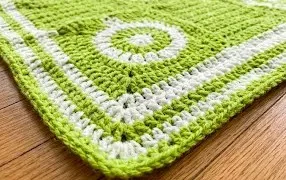
Your finished Grinch square brings a playful face and a bright holiday ornament into a cozy piece of crochet you can display or add to a larger project. For a simple variation, use gold yarn instead of red for the ornament and keep the rest of the chart colors unchanged. When your square is complete, share a photo on Pinterest or your favorite social platform so other crocheters can see how your colors turned out. You can also browse the blog for more free crochet patterns, from seasonal C2C designs to useful projects for everyday making.