Easy Birds Crochet Phone Case Pattern: Free Step-by-Step
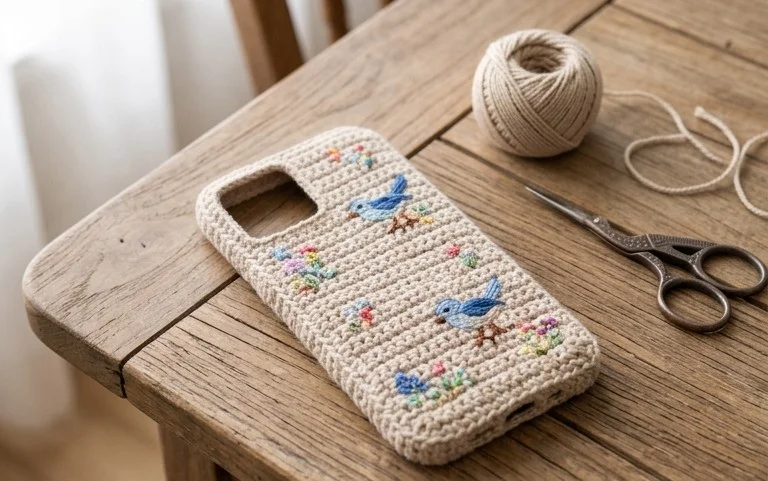
Soft cotton yarn forms the protective walls of this cozy accessory, which keeps your device safe inside a lightweight shell. You will notice the tight stitches create a firm barrier, while the bird motif adds a cheerful detail that stands out in your bag. This project suits anyone who wants a quick gift or a simple way to customize their everyday gear. You get to practice working in the round and color changing, two techniques that build a clean, professional finish for your final work. It fits most standard smartphones comfortably, providing a functional home for your tech.
Why Crocheters Love It
The Classic Crochet Dishcloth uses the simple moss stitch, which creates a dense yet flexible fabric that scrubs effectively while drying quickly. You can finish one of these in a single evening, making it an ideal choice for testing a new yarn color or working through small leftovers in your stash. Because it uses only basic chains and single crochets, the rhythm is easy to memorize for those times when you want to keep your hands busy while watching television or listening to a podcast. The finished texture holds suds well, providing a functional tool that lasts significantly longer than disposable sponge alternatives.
I managed to whip up three of these in a weekend, and they have completely replaced the store-bought sponges in my kitchen. The moss stitch gives it such a nice, thick feel that holds up perfectly after several trips through the laundry.
— Sarah, home crafter
Pattern Overview & Skill Level
- Skill Level: Beginner
- Approximate Time: 1 hour per cloth
- Construction: Worked in flat rows using the moss stitch (alternating single crochet and chain spaces)
- Finished Dimensions: 8 inches by 8 inches
Materials & Supplies Needed
- Yarn: Worsted weight (#4), 100% cotton, approximately 60 yards per cloth. Cotton is essential for its absorbency and heat resistance.
- Hook Size: 5.0 mm (US H-8). This size ensures the stitches remain tight enough to be sturdy but loose enough to maintain a soft drape.
- Notions: Tapestry needle for weaving in ends and a pair of sharp scissors.
- Safe Yarn Substitutions: You may use a cotton-acrylic blend for a softer feel, though it will be slightly less absorbent than 100% cotton. Avoid wool or synthetic acrylics for kitchen use, as they do not handle high heat or water absorption as effectively as cotton fibers.
Stitch Guide & Abbreviations (US Terms)
- ch = chain
- sc = single crochet
- st/sts = stitch/stitches
- sk = skip the indicated stitch
- sp = space (the gap created by a chain)
- Moss Stitch: A pattern of [sc, ch 1, sk 1] across the row.
Step-by-Step Pattern Instructions
The dishcloth is worked from the bottom up in flat rows. You will turn your work at the end of every row.
- Foundation: Ch 32.
- Row 1: Sc in the 4th ch from the hook, *ch 1, sk 1 ch, sc in the next ch; repeat from * until the end of the row. Turn. (15 sc, 14 ch-1 spaces)
- Row 2: Ch 2, sc in the first ch-1 space, *ch 1, sk the next sc, sc in the next ch-1 space; repeat from * until you reach the turning chain space. Work your final sc into the turning chain space. Turn. (15 sc, 14 ch-1 spaces)
- Rows 3-30: Repeat Row 2 until the piece measures 8 inches square.
- Finishing: Fasten off, leaving a 6-inch tail. Use your tapestry needle to weave the yarn tail back and forth through the base of the stitches to secure it invisibly.
Care & Washing Instructions
- Machine wash on a warm, gentle cycle to remove oils and kitchen residue.
- Tumble dry on low heat or lay flat on a clean towel to prevent shrinking.
- Avoid liquid fabric softeners, as they leave a coating on the cotton fibers that reduces the cloth’s natural ability to absorb water.
Pro Tips & Common Mistakes to Avoid
- Consistent tension is vital for the moss stitch. If your tension is too loose, the fabric will look holey; if it is too tight, the fabric will be stiff. Practice a small swatch of 10 chains before starting your main project.
- Always place a stitch marker in the first stitch of every row to ensure you do not accidentally drop stitches at the edges, which is the most common reason for uneven sides.
- Weave your ends into the body of the cloth rather than just along the edge. This keeps them hidden and prevents the tails from pulling loose when the cloth is scrubbed against surfaces.
- If you wish to make a larger washcloth or a small hand towel, increase your foundation chain by an even number. Keep in mind that a larger size requires more yardage, so ensure you have enough yarn before starting.
Frequently Asked Questions
Can I use a different yarn weight for this pattern?
Yes, you can use a lighter or heavier yarn, but your gauge will change. If using sport weight, increase your foundation chain to maintain the 8-inch width. If using bulky yarn, decrease the chain count accordingly.
Is this pattern suitable for someone who has never crocheted before?
This is a perfect first project because it focuses on the most basic stitch combinations. By working through these rows, you will gain excellent practice in maintaining even tension and reading your stitches.
Should I block the finished dishcloth?
Blocking is not strictly necessary for utility items like dishcloths. However, if you want the edges to look perfectly straight, you can dampen the cloth and lay it flat, pinning the corners to a towel until it dries.
Can I sell the dishcloths I make from this pattern?
You are welcome to sell the finished items you create using this design. Please credit the pattern origin whenever possible, but do not reproduce the written instructions themselves for sale or distribution.
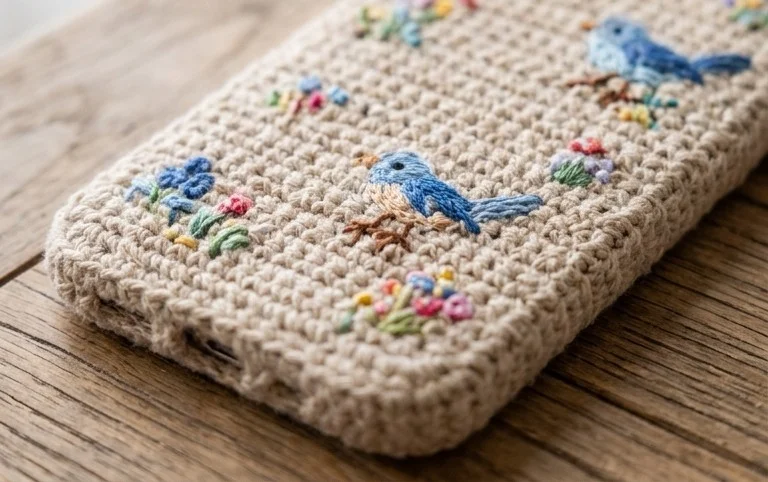
A finished holder makes a thoughtful gift that actually gets used every single day by its recipient. You can swap the bird colors to match a specific species, such as a blue jay or cardinal, or choose a thicker cotton cord for added structure. Posting a photo of your work on social media helps other makers find inspiration for their own stash-busting projects. Please visit the rest of the blog to browse more free patterns for other useful accessories you can build over a quiet weekend afternoon.