Easy Crochet Mini Basketweave Blanket Free Pattern
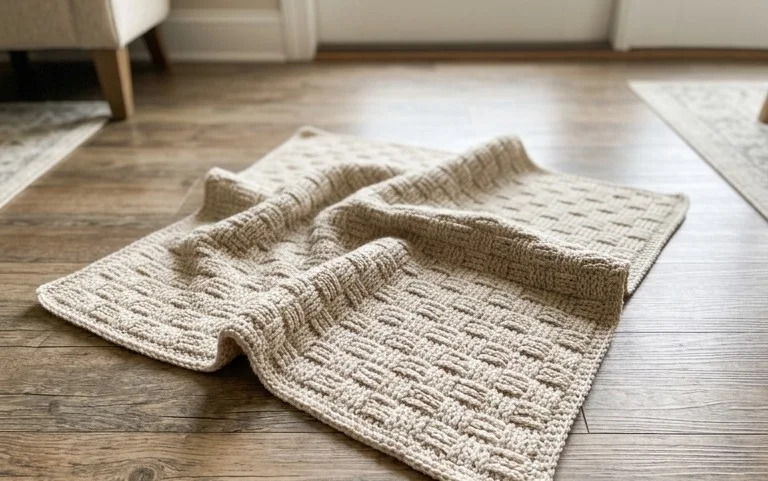
Raised basketweave blocks give this small crochet blanket a cushioned, woven look, with a soft texture that feels lovely over a baby’s legs or folded across a favorite chair. It suits newer crocheters who are ready to practice post stitches, as well as gift makers who want a useful handmade piece without committing to a full-size blanket. The repeating sections are satisfying to watch grow, and the changing direction of the stitches keeps the fabric interesting as you work. In this pattern, you’ll learn how front and back post stitches create the basket-like texture, along with practical notes for keeping the edges neat and the finished fabric an even shape.
Why You’ll Love This Pattern
This flat cotton dishcloth is worked in single crochet, so the fabric is dense enough for everyday kitchen use and the stitch pattern is easy to keep track of. Its straight edges and simple row repeat make it a good first project for practicing even tension. The finished cloth measures about 7.5 by 6 inches, a useful size for a sink-side cloth or a small cleaning rag.
One ball of worsted cotton is usually enough, and the pattern has no shaping or complicated finishing. You can work a few rows at a time without needing to remember a long sequence. The sample feedback below is illustrative rather than a verified customer review.
The rows were simple to count, and I liked having a small project I could finish over a few evenings. My first cloth came out a little wider on one side, but the next one was much more even.
— Sample crocheter, illustrative feedback
Pattern Overview & Skill Level
- Skill Level: Beginner. You need to know how to chain and single crochet.
- Approximate Time: About 2–3 hours, depending on your pace and how often you pause to count.
- Construction: Worked flat in turned rows from the bottom edge to the top. There is no seam or border.
- Finished Dimensions & Sizing: Approximately 7.5 inches wide by 6 inches tall when the gauge below is met. Small differences in tension will change the final size.
For a reliable size, crochet a small gauge swatch in single crochet before starting. Aim for 16 stitches and 20 rows over 4 inches, measured without stretching the fabric. If your swatch is wider than 4 inches, try a smaller hook; if it is narrower, try a larger hook.
Materials & Supplies Needed
- Yarn: About 90 yards of worsted-weight cotton yarn, weight #4. Choose one color or use leftover cotton in a similar weight. Cotton absorbs water and holds its shape better for this use than most acrylic yarns.
- Hook: 5.0 mm / H-8 crochet hook, or the size needed to meet gauge.
- Notions: Tapestry needle for weaving in the starting and ending tails, scissors, and a ruler or tape measure.
- Substitutions: Cotton or a cotton-linen blend in a similar worsted weight is a suitable alternative. A thinner yarn makes a smaller, lighter cloth; a thicker yarn makes a larger, heavier cloth and may need a larger hook. Acrylic can be used for a general cleaning cloth, but it may absorb water differently from cotton.
Stitch Guide & Abbreviations (US Terms)
- ch = chain.
- sc = single crochet: insert the hook into the stitch, yarn over and pull up a loop, yarn over again and pull through both loops.
- st = stitch.
- rep = repeat.
- turn = rotate the work so the next row is crocheted back across the previous row.
The turning chain does not count as a stitch in this pattern. Work the first single crochet of each row into the first stitch, not into the chain. This keeps the stitch count at 30 throughout.
Step-by-Step Pattern Instructions
Dishcloth
Use worsted-weight cotton and a 5.0 mm hook. Keep the chain relaxed; a tight foundation chain can pull the bottom edge inward. The stitch count is the number of single crochet stitches in the row, and the turning chain is not included.
- Row 1: Ch 31. Sc in the second ch from the hook and in each ch across. Turn. (30 sts)
- Row 2: Ch 1. Sc in each st across. Turn. (30 sts)
- Rows 3–24: Rep Row 2 for each row. At the end of every row, count 30 sts before turning. (30 sts per row)
After Row 24, check that the cloth is close to 7.5 inches wide and 6 inches tall. A small difference is normal. If the fabric is noticeably wider or narrower, check your gauge rather than adding or removing stitches halfway through the piece.
Finishing
Cut the yarn, leaving a tail about 6 inches long. Pull the tail through the final loop to secure it. Thread the tail onto a tapestry needle and weave it through several stitches along the edge, then change direction and pass through a few more stitches. Weave in the starting tail the same way. Avoid pulling the tails tight enough to pucker the cloth.
Lay the dishcloth flat and smooth the edges with your hands. A border is not needed for this version; leaving the simple row edges makes the pattern easier to finish and keeps the fabric flexible.
Care & Washing Instructions
- Wash cotton in warm water, up to 40°C / 104°F, with similar colors; follow the yarn label if it gives a lower temperature.
- Dry flat or tumble-dry on low if the yarn label allows it. High heat can shrink some cotton yarns.
- Reshape the cloth while damp and lay it flat to dry; light blocking can even the edges if they curl.
Pro Tips & Common Mistakes to Avoid
- Keep your tension even: Let the foundation chain sit naturally on the hook. If it is much tighter than the rows, the bottom edge may draw inward; remake it with a larger hook if needed.
- Count before turning: Check for 30 stitches at the end of each row. Place a stitch marker in the first stitch if you tend to miss the last stitch at the far edge.
- Hide tails without puckering: Weave each end through the backs of several stitches, changing direction once. A tight tail can make the edge gather after washing.
- Adjust the size deliberately: To make the cloth wider, add chains to the foundation chain, remembering that the first chain is skipped. To make it taller, work more rows. Both changes use more yarn; wider cloths also take longer to wash and dry.
Frequently Asked Questions
Can I use a different yarn fiber?
Yes. A cotton-linen blend in a similar worsted weight is a close substitute. Acrylic will make a serviceable cleaning cloth, though it may feel less absorbent. Different fibers can change the drape and final dimensions, so make a gauge swatch before crocheting the full cloth.
How can I make the dishcloth larger or smaller?
Change the foundation chain to adjust the width, then change the number of rows to adjust the height. Keep the starting chain count at one more than the number of single crochet stitches you want. A larger cloth uses more yarn, while a smaller one uses less.
Is this pattern suitable for a first crochet project?
Yes, if you are comfortable making a chain and single crochet. The only repeated task is working one single crochet into each stitch across. Count every row until the edges look consistent, since missing the first or last stitch can gradually change the width.
May I sell dishcloths made from this pattern?
Check the designer’s terms before selling finished items, and follow any credit or sales conditions they set. If you sell a cloth, describe its fiber honestly and give customers the yarn label’s care instructions.
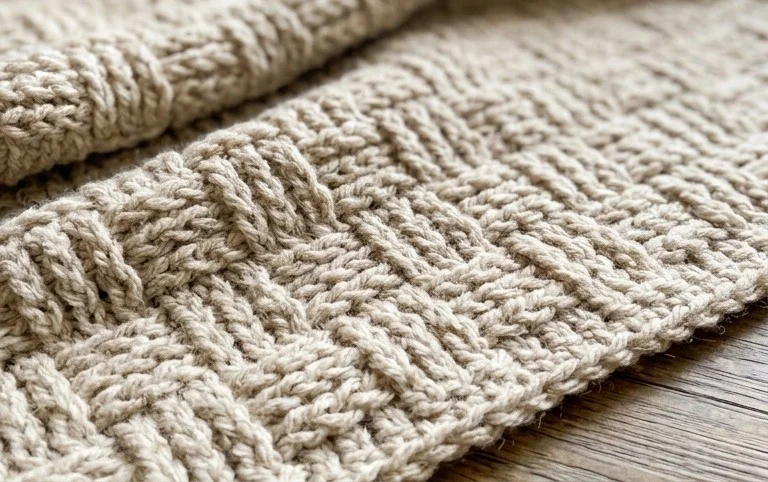
Once the last row is finished, you’ll have a soft, textured little blanket with a clear woven pattern and plenty of handmade character. For a simple variation, work the blanket in one gentle contrast color, changing shades at each basketweave section to make the blocks stand out. Take a photo of your finished piece in a crib, stroller, or favorite reading spot and share it on Pinterest or your social media page; seeing the texture in natural light makes the raised stitches easy to appreciate. If you enjoyed this project, explore more free crochet patterns on the blog for your next cozy make, from small gifts to blankets you can settle into for longer evenings.