Easy Crochet Poinsettia Flower: Free Beginner Pattern
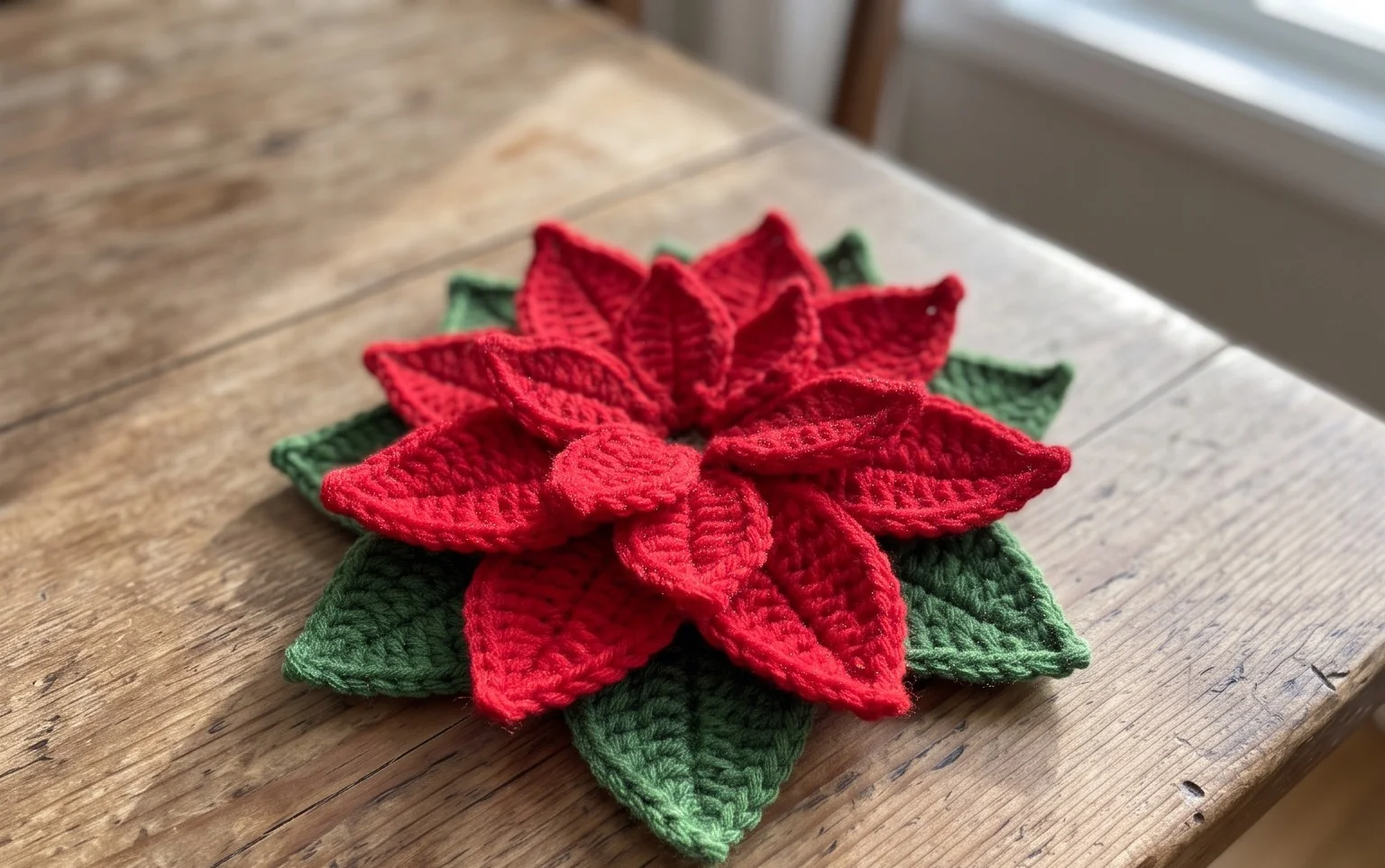
A crochet poinsettia adds a soft, tactile touch to your holiday table or mantle that store-bought plastic decor simply cannot match. The finished flower feels dense and sturdy, with velvety red petals that maintain their shape throughout the festive season. This project works well for anyone new to three-dimensional fiber arts because it relies on simple increases and consistent tension rather than complex structural components. You will learn to build the blossom from the center outward, utilizing basic shaping techniques that allow the petals to stand upright on their own. It is a rewarding way to use up yarn ends while creating a lasting heirloom piece.
Why You Will Love This Pattern
This beginner-friendly project works up quickly using basic single crochet stitches, making it a perfect introduction to three-dimensional amigurumi construction. You only need a small amount of worsted weight yarn, which is ideal for using up those leftover bits from your stash. The finished item creates a firm, dense fabric that holds its shape well without requiring complex internal armatures. Because the pattern relies on continuous rounds, you spend less time joining rows and more time focused on consistent tension and stitch placement.
I managed to finish this little project in just under two hours. The instructions are very clear about where to place the increases, and the final piece looks exactly like the photos.
— Sarah, amigurumi hobbyist
Pattern Overview & Skill Level
- Skill Level: Beginner
- Approximate Time: 1.5 to 2 hours
- Construction: Worked in continuous rounds using a magic ring, with increases and decreases to shape the body
- Finished Dimensions: 4 inches tall by 3 inches wide
Materials & Supplies Needed
- Yarn: Worsted weight (#4), 100% cotton or acrylic blend, approximately 30 yards.
- Hook Size: 3.5 mm (E-4) for a tight gauge that prevents stuffing from showing through.
- Notions: Fiberfill stuffing, 6mm safety eyes, yarn needle, and a stitch marker to track the start of rounds.
- Yarn Substitutions: Wool or alpaca can be used for a softer texture, though they may stretch more than cotton; lighter weight yarns will result in a smaller finished size unless you adjust hook size accordingly.
Stitch Guide & Abbreviations (US Terms)
- MR: Magic Ring (a way to start rounds by crocheting over a loop)
- ch: Chain
- sc: Single crochet
- inc: Increase (work 2 sc into the same stitch)
- dec: Decrease (sc2tog; insert hook in front loop of next two stitches, yarn over, pull through, yarn over and pull through remaining two loops)
- st(s): Stitch(es)
- sl st: Slip stitch
- BLO: Back loop only
Step-by-Step Pattern Instructions
Body
- Rnd 1: Start 6 sc in a MR (6 sts).
- Rnd 2: Inc in each st around (12 sts).
- Rnd 3: [Sc 1, inc] 6 times (18 sts).
- Rnd 4: [Sc 2, inc] 6 times (24 sts).
- Rnd 5-10: Sc in each st around (24 sts).
- Rnd 11: [Sc 2, dec] 6 times (18 sts). Insert safety eyes between rows 7 and 8, spaced 4 stitches apart. Add fiberfill stuffing.
- Rnd 12: [Sc 1, dec] 6 times (12 sts).
- Rnd 13: Dec 6 times (6 sts). Fasten off and weave in the tail to close the hole.
Assembly
Use your yarn needle to sew the final opening shut by threading the yarn through the front loops of the remaining 6 stitches and pulling tightly. Ensure the stuffing is evenly distributed so the base of the piece sits flat on a table. If you are adding facial details, use a small strand of black embroidery thread to stitch a small nose or mouth just below the eyes before you close the final round.
Care & Washing Instructions
- Hand wash in cool water using a gentle detergent specifically formulated for knit and crochet items.
- Roll the item in a clean towel to remove excess moisture and lay it flat on a drying rack away from direct sunlight.
- If the item becomes misshapen, gently squeeze and pull it back into the desired form while it is slightly damp.
Pro Tips & Common Mistakes to Avoid
Maintain a consistent tension throughout the project to ensure the stuffing does not peek through the gaps between your stitches. Always place a stitch marker in the first stitch of every round; since you are working in a continuous spiral, it is easy to lose track of where a round ends without one. Weave in your yarn ends by running the needle through the inside of the body rather than knotting them, which creates a cleaner and more professional finish. If you want to make a larger version of this item, you can use a heavier weight yarn and a corresponding larger hook, but note that this will require more stuffing and yardage.
Frequently Asked Questions
Can I use a larger hook size than recommended?
Using a larger hook will make the stitches looser, which causes the stuffing to show through. Stick to a hook size smaller than what is listed on the yarn label to achieve the dense fabric necessary for amigurumi.
Is this pattern suitable for complete beginners?
Yes, this project only requires the ability to work in rounds and master the single crochet stitch. It is a manageable size that allows you to practice shaping without getting overwhelmed by complex instructions.
How do I substitute the safety eyes?
If you prefer not to use plastic safety eyes, you can embroider the eyes using black yarn or embroidery thread. This makes the finished object safer for very young children.
Can I sell the finished items made from this pattern?
Check the designer’s individual terms of use for this specific pattern. While most designers allow the sale of handmade items created from their patterns, they often require credit to be given to the original designer in the item listing.
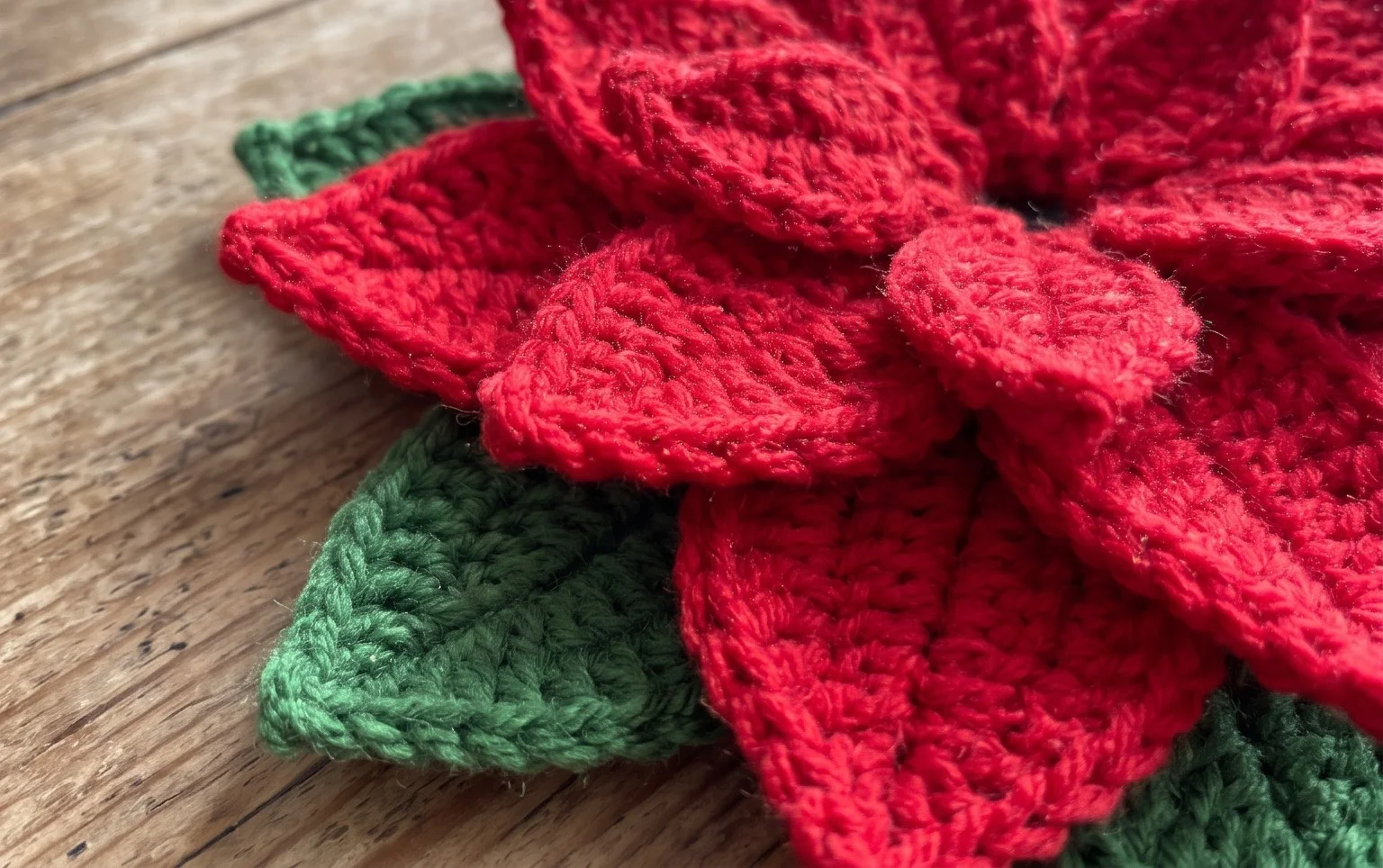
Your finished poinsettia looks stunning displayed in a small vase or attached to a handmade gift box for a festive personal touch. Try crafting a smaller version using a thinner lace weight yarn to create delicate napkin rings or ornament toppers for your tree. Please share your project photos on social media so others can see how your color choices turned out. Browse the rest of the pattern archive on this blog for more seasonal ideas that help you keep your hook busy all winter long.